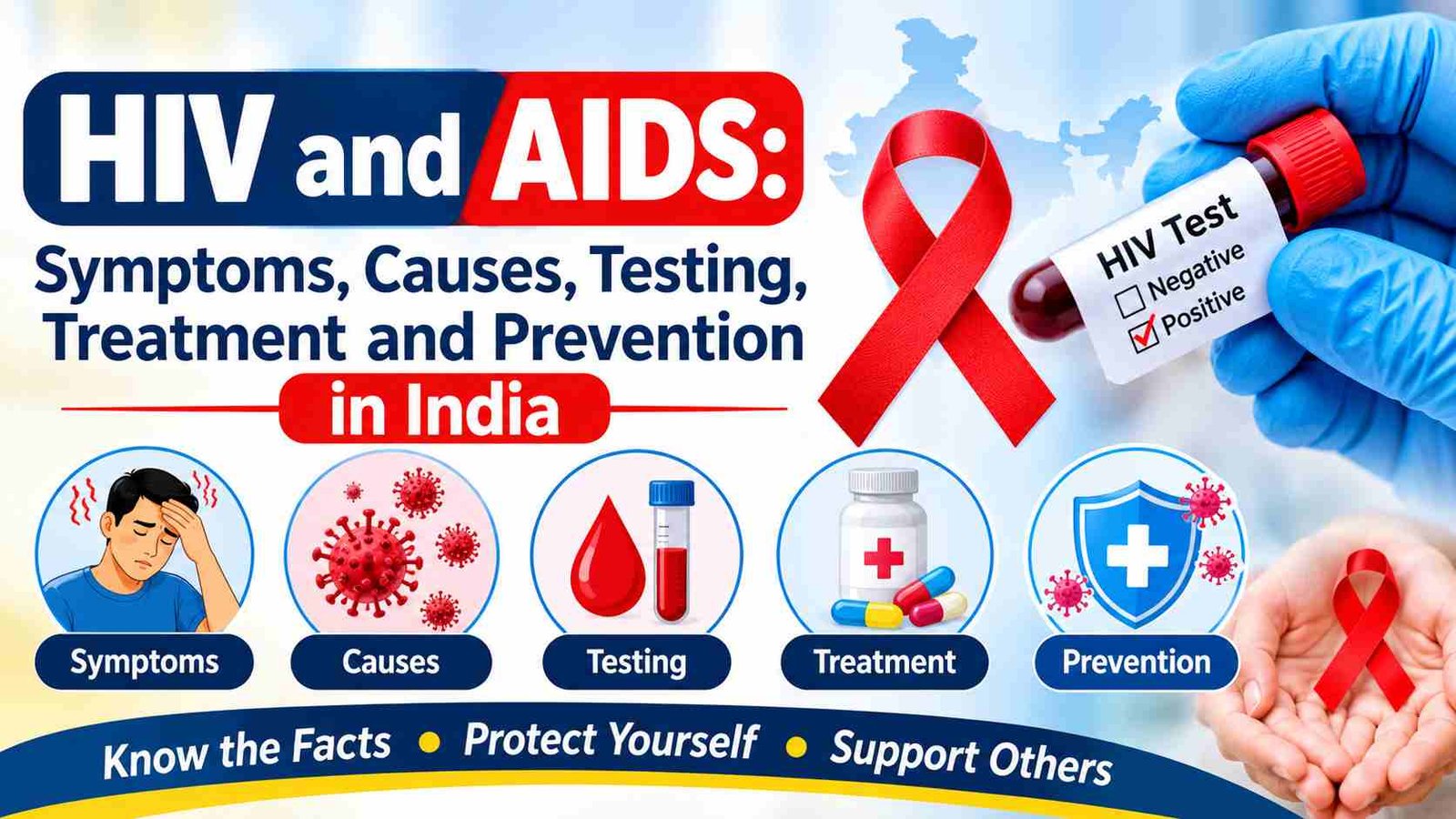
If you are searching for HIV symptoms late at night with a racing heart, first take a breath. Worry is normal, but the good news is that HIV is now a manageable condition. With the right test and treatment, people live long, healthy lives. This guide explains HIV in simple words: the early signs, how it spreads, when to get tested, what treatment looks like in India, and how to protect yourself and your family.
Quick answer: HIV (Human Immunodeficiency Virus) is a virus that attacks the body’s immune system. Early symptoms such as fever, sore throat, rash and swollen glands can appear 2 to 4 weeks after infection, but many people have no symptoms for years. The only way to know is an HIV test. With daily antiretroviral treatment (ART), HIV can be controlled and passing it on can be stopped.
This article is part of our World AIDS Day 2026 coverage. This year’s theme, according to WHO and UNAIDS, is “Ending AIDS starts with access”, which means access to testing, treatment, rights and respect for everyone.
What Is HIV? What Is AIDS? (AIDS Kya Hai?)
HIV is a virus. It slowly damages the CD4 cells (a type of white blood cell) that help your body fight infections. AIDS (Acquired Immunodeficiency Syndrome) is the most advanced stage of HIV infection, when the immune system is badly damaged and the body can no longer fight serious infections or certain cancers.
In short: HIV vs AIDS is not a choice between two diseases. HIV is the infection; AIDS is the late stage that can develop if HIV is not treated. With modern treatment, most people with HIV never reach the AIDS stage. In Hindi, you may see this written as “AIDS kya hai”: AIDS एचआईवी संक्रमण की अंतिम अवस्था है, और समय पर इलाज से इससे बचा जा सकता है।
How Does HIV Spread?
HIV spreads through certain body fluids: blood, semen, vaginal fluids, rectal fluids and breast milk. The virus must get from these fluids into another person’s bloodstream. The main ways are:
- Unprotected sex (vaginal, anal or oral) with a person who has HIV and is not on effective treatment
- Sharing needles or syringes, including for drug use
- Infected blood or blood products, which is very rare in licensed blood banks that test every unit
- From mother to child during pregnancy, birth or breastfeeding, if the mother is not on treatment
- Unsterilised needles for tattoos, piercings or injections in unsafe settings
HIV does not spread through hugging, shaking hands, kissing, sharing food or utensils, coughing, sneezing, mosquito bites, swimming pools or toilet seats. Knowing this helps us treat people with HIV with kindness instead of fear.
HIV Symptoms: What to Look For
HIV usually moves through three stages, and the HIV symptoms are different in each one.
Stage 1: Acute HIV infection (2 to 4 weeks after exposure). About half of people feel like they have a bad flu. Common signs are:
- Fever and chills
- Sore throat
- Skin rash
- Swollen glands in the neck, armpits or groin
- Tiredness and muscle aches
- Mouth ulcers or headache
At this stage the amount of virus in the blood is very high, so a person can pass HIV on easily, even if they feel only mildly unwell.
Stage 2: Chronic HIV (clinical latency). The virus keeps multiplying at low levels. Many people feel completely fine and have no symptoms for 5, 10 or even more years if untreated. This is why regular testing matters.
Stage 3: AIDS. When the immune system is badly weakened, signs can include rapid weight loss, repeated fevers or night sweats, long-lasting diarrhoea, persistent cough (especially with tuberculosis), white patches in the mouth, skin sores, memory problems and frequent infections.
Important: None of these signs prove you have HIV. Fever, rash and sore throat are common in many illnesses, such as dengue fever or viral flu. Only a test can confirm HIV. If you had a possible exposure, get tested, do not guess from symptoms.
Who Is at Higher Risk and Who Should Get Tested?
Anyone who is sexually active or has had a risky exposure can get HIV. Doctors especially advise testing if you:
- Had unprotected sex with a new or multiple partners, or a partner whose status you do not know
- Shared needles or syringes
- Had an unsafe injection, tattoo or blood transfusion outside a regulated setting
- Have a sexually transmitted infection (STI) or tuberculosis
- Are pregnant or planning a pregnancy (HIV testing is part of routine antenatal care)
- Are a partner of someone who has tested positive
A test is also a good idea once a year if you are at ongoing risk. Testing is an act of care for yourself and others, not a judgement.
HIV Test and Window Period: How Soon Can You Test?
The HIV window period is the time between exposure and the point when a test can reliably detect the virus. Testing too early can give a false “negative” result, so timing matters. Based on guidance from public health agencies such as the CDC:
- NAT (nucleic acid test): can detect HIV about 10 to 33 days after exposure
- Antigen/antibody lab test (4th generation): about 18 to 45 days
- Rapid antigen/antibody finger-prick test: about 18 to 90 days
- Antibody-only tests (including many rapid tests and self-tests): about 23 to 90 days
If your first test is negative but it was done within the window period, repeat it after the recommended time, usually at 45 days and again at 3 months, as advised by your doctor. If a test is reactive (positive), a second confirmatory test is done before a diagnosis is made. Do not panic over a single screening result.
In India, free and confidential testing is available at ICTC (Integrated Counselling and Testing Centres) in government hospitals and health centres, with pre- and post-test counselling. You can also call the national AIDS helpline 1097 for information.
HIV Treatment in India: Antiretroviral Therapy (ART)
There is currently no cure for HIV, but there is excellent treatment. ART is a combination of daily medicines that stops the virus from multiplying. When taken regularly:
- The virus level in the blood falls to “undetectable”
- The immune system recovers and stays strong
- The person can expect a near-normal lifespan
- A person with an undetectable viral load cannot pass HIV to a sexual partner. This is known as U=U (Undetectable = Untransmittable)
In India, ART is provided free of cost through government ART centres under the National AIDS Control Programme, and treatment is recommended for everyone diagnosed, as early as possible. Large government hospitals, including AIIMS Delhi, run HIV testing and treatment services, and private hospitals such as Indraprastha Apollo Hospital have infectious disease and internal medicine specialists. Please confirm services and timings directly with the hospital before visiting.
The key rule: never skip doses or stop ART on your own. Missing medicines allows the virus to become resistant. Regular blood tests (CD4 count and viral load) help your doctor track progress.
How to Prevent HIV
Prevention works best when you combine several tools:
- Condoms: use a new condom correctly every time you have sex. It also protects against other STIs.
- PrEP (pre-exposure prophylaxis): daily medicine for HIV-negative people at high risk. Ask a doctor about availability in India.
- PEP (post-exposure prophylaxis): a 28-day course of medicines that can stop infection after a possible exposure. It must start as early as possible, within 72 hours.
- Safe injections: use only new, sterile needles and syringes. Never share them.
- Safe blood: accept blood only from licensed, tested blood banks.
- Treatment in pregnancy: with ART, the chance of passing HIV from mother to baby falls to very low levels. All pregnant women should be tested.
- Regular testing for you and your partner.
Living With HIV: Rights, Pregnancy and Mental Health
A positive result can feel overwhelming, but a person on ART can study, work, marry, travel and have healthy children. Mental health matters too. Many people find counselling and peer-support groups very helpful, and talking to a trusted person helps reduce fear.
In India, the HIV and AIDS (Prevention and Control) Act, 2017 protects people from discrimination in jobs, schools, healthcare and housing, and requires medical information to be kept confidential. If you face stigma at a hospital or workplace, you have legal rights and can seek help through the helpline or an HIV support network.
People with HIV also have a higher risk of conditions like tuberculosis, so regular check-ups matter. If you ever notice memory problems, numbness or seizures, a neurologist can help. See our guide to the Best Neurologist in India.
World AIDS Day 2026: Why Access Matters
Every year on 1 December, the world remembers people lost to AIDS and renews the promise to end it as a public health threat. The 2026 theme, “Ending AIDS starts with access”, reminds us that having tests and medicines is not enough. People must be able to reach them without cost, fear or stigma. You can help by getting tested, sharing correct facts, and treating people living with HIV with respect.
Frequently Asked Questions
What are the first symptoms of HIV?
The first signs are usually flu-like: fever, sore throat, rash, swollen glands, tiredness and muscle aches, appearing 2 to 4 weeks after infection. Some people have no symptoms at all, so testing is the only reliable way to know.
How long after exposure do HIV symptoms appear?
Acute symptoms may appear within 2 to 4 weeks, but many people feel fine for years. Do not wait for symptoms. Get tested at the right time after a risky exposure.
What is the difference between HIV and AIDS?
HIV is the virus that damages the immune system. AIDS is the advanced stage that can develop if HIV is left untreated. With ART, most people never develop AIDS.
What is the HIV window period?
It is the time between exposure and when a test can detect HIV, from about 10 days for NAT to up to 90 days for antibody tests. If you test early and get a negative result, repeat the test later.
Can HIV be cured?
There is no approved cure yet, but ART controls the virus so well that people can live a near-normal life. Treatment is lifelong and must be taken every day.
Where can I get a free HIV test in India?
Government hospitals and health centres have ICTC centres that offer free, confidential testing and counselling. You can also call the national AIDS helpline 1097 for guidance.
Can HIV spread through kissing, hugging or sharing food?
No. HIV does not spread through casual contact, saliva, sweat, shared utensils, toilets or mosquito bites. It spreads through blood, sexual fluids and breast milk.
Can a person with HIV have a healthy baby?
Yes. With ART during pregnancy, safe delivery and proper care for the baby, the risk of passing HIV to the child becomes very low. Every pregnant woman should get tested.
What is PEP and when should I take it?
PEP is a 28-day course of HIV medicines taken after a possible exposure. It must be started as soon as possible and within 72 hours. Visit a hospital emergency or ART centre immediately.
What does U=U mean?
U=U stands for Undetectable = Untransmittable. A person on ART whose viral load stays undetectable cannot pass HIV to a sexual partner, which is why treatment also protects others.