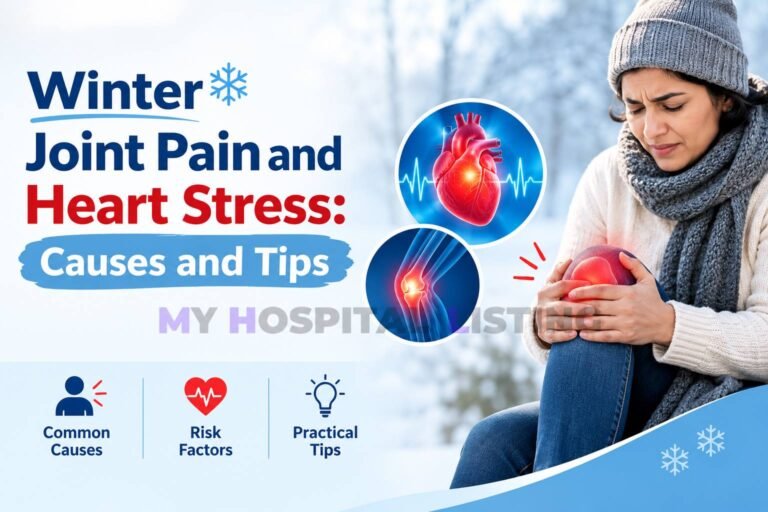
Every winter, the same complaints show up in clinics: stiff knees in the morning, aching fingers, and a heart that seems to work harder on cold days. If that sounds familiar, you are not imagining it. Cold weather does change how your Winter joint pain and cardiovascular system behave, and understanding why can help you stay comfortable and safe through the season.
Why cold weather makes joints stiffer
Joints are cushioned by cartilage and surrounded by synovial fluid, which keeps movement smooth. When temperatures drop, the fluid becomes thicker and muscles and tendons tighten. Many people with arthritis notice this as longer morning stiffness and more discomfort after sitting still. Cold also makes nerves more sensitive to pain signals, which is one reason an old knee injury can suddenly feel worse in December.
Some people believe that changes in air pressure before a storm are the main cause of joint pain. Research on this is mixed. Cold temperature and lower activity are more consistent explanations, and they are easier to act on.
How cold affects your heart and blood pressure
When your skin and body are exposed to cold, your blood vessels narrow, a process called vasoconstriction. This helps conserve body heat, but it also pushes blood pressure upward. For people who already have high blood pressure, that rise can be significant. Your heart has to pump against narrower vessels, so it works harder.
Cold weather also tends to affect daily habits. People exercise less, wear heavy clothes that restrict movement, and sometimes shovel snow or walk in icy conditions. Each of these adds strain on the heart. Several studies have found that cardiac events, including heart attacks, are more common during colder months, especially in older adults. The exact reasons are still being studied, but the pattern is consistent enough that cardiologists often advise extra care in winter.
Who is most at risk
Some people need to pay closer attention during winter:
- Adults with high blood pressure, heart disease, or a history of heart attack or stroke.
- People with arthritis, especially rheumatoid arthritis or osteoarthritis that limits daily movement.
- Older adults, who often have less muscle mass and slower circulation.
- People who have recently had surgery or an injury to a joint.
- Anyone who is physically inactive during the colder months.
If you fall into one of these groups, it is worth talking to your doctor before winter starts about your medication, your blood pressure targets, and an activity plan you can keep.
Warning signs you should not ignore
Some symptoms need emergency care, not a wait-and-see approach. Call emergency services right away if you have chest pain or pressure, pain spreading to the arm, jaw, or back, shortness of breath, sudden dizziness, or fainting. Do not drive yourself to the hospital in these situations.
Joint pain that comes with redness, heat, swelling, or fever may signal infection or inflammation and needs prompt medical review. Stiffness that lasts more than an hour each morning, or pain that keeps you from sleeping, is also a reason to book an appointment with an orthopaedic specialist or your primary doctor.
Practical steps to protect your joints and heart
Small habits make a real difference:
- Dress in layers. Keep your core, head, hands, and feet warm. Losing body heat through extremities is what drives much of the blood vessel narrowing.
- Warm up before going out. Spend five to ten minutes doing gentle movement indoors before a walk or chores.
- Stay active indoors. Simple stretching, walking around the house, or a short session of low-impact exercise helps keep joints mobile.
- Check your blood pressure regularly. If you have a home monitor, record readings at the same time each day and share them with your doctor.
- Take medicines as prescribed. Do not stop or change blood pressure or arthritis medication without speaking to your doctor, even if the weather improves.
- Avoid heavy snow shoveling. If you must do it, take breaks, push snow instead of lifting, and stop if you feel chest discomfort.
When to see a specialist
A general physician is a good first stop. For persistent joint pain, an orthopaedic doctor can assess the joint and suggest treatment, while a physiotherapist can design a movement programme that builds strength and reduces stiffness. If you have heart symptoms or a known heart condition, a cardiologist should review your risk, especially if your blood pressure is hard to control in winter.
Physiotherapy is often underused. A few targeted sessions can teach you exercises you can continue at home, which many people find more effective than rest alone.
Why do my joints hurt more in winter?
Why do my joints hurt more in winter?
Why do my joints hurt more in winter?
Yes. Cold causes blood vessels to narrow, which can push blood pressure higher, particularly in people who already have hypertension.
Can cold weather trigger a heart attack?
Cold exposure is associated with a higher rate of cardiac events, mainly because of blood pressure changes and physical strain. Recognising warning signs and acting quickly matters most.
Should I take pain relievers for winter joint pain?
Some over-the-counter pain relievers can help, but they are not suitable for everyone, especially people with heart or kidney conditions or those taking blood thinners. Ask your doctor or pharmacist before using them regularly.
Can I prevent winter joint pain completely?
You may not prevent it entirely, but you can reduce its impact through regular movement, warmth, weight management, and consistent treatment of any underlying condition.
How do I know if my heart symptoms are serious?
Chest pain, pressure, breathlessness, or fainting should always be treated as urgent. Call emergency services rather than waiting to see if symptoms pass.