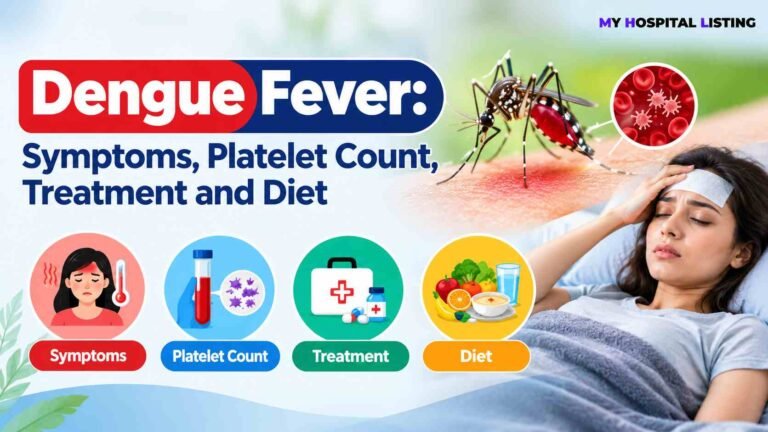
Every year, once the monsoon ends, the same story repeats in many Indian homes. Someone gets a sudden high fever, the body starts aching like never before, and within a day or two the family is asking one worry-filled question: “Is it dengue?” If you are in that situation right now, take a breath. Most people recover well from dengue fever with rest, fluids and proper monitoring. The key is knowing what to watch for and when to call a doctor.
In this guide, we explain Dengue Fever Symptoms, the platelet count in dengue, the right dengue treatment, the best dengue diet, and simple dengue prevention steps, in plain language you can actually use.
What Is Dengue Fever?
Dengue fever is a viral infection spread by the bite of an infected Aedes aegypti mosquito. These mosquitoes breed in clean, stagnant water, such as water in coolers, flower pots, buckets, old tyres and water tanks. Unlike many other mosquitoes, they usually bite during the day, especially early morning and late afternoon.
There are four types (serotypes) of the dengue virus. Once you recover from one type, you become immune to that type, but not to the other three. This is why catching dengue a second time can happen, and a repeat infection can sometimes be more serious.
Early Dengue Symptoms You Should Not Ignore
Dengue symptoms usually appear 4 to 10 days after the mosquito bite. They often start suddenly. The most common signs are:
- Sudden high fever, often 103°F to 105°F
- Severe headache, especially behind the eyes
- Intense muscle, bone and joint pain (this is why dengue is also called “breakbone fever”)
- Nausea and vomiting
- Skin rash, which often appears 2 to 5 days after the fever starts
- Extreme tiredness and loss of appetite
- Mild bleeding from the nose or gums in some people
Many people mistake these signs for a common viral fever. If the fever is high and the body pain is unusual, especially during dengue season, get tested instead of waiting.
Warning Signs: When Dengue Becomes Dangerous
The risky period often begins around day 3 to day 7, usually when the fever starts to come down. This is the moment families relax, but it is actually the time to be most careful. Go to a hospital immediately if you notice:
- Severe or constant stomach pain
- Repeated vomiting, or being unable to drink fluids
- Bleeding from the gums or nose, blood in vomit, urine or stools
- Black or tarry stools
- Cold, clammy skin and extreme weakness
- Rapid breathing or difficulty in breathing
- Drowsiness, confusion or restlessness
- Very little urine output
In children, the elderly, pregnant women and people with diabetes, heart or kidney problems, do not wait. Get medical help early.
Dengue Tests: How Is It Confirmed?
Doctors usually advise these tests:
- NS1 antigen test: Best in the first 1 to 5 days of fever
- Dengue IgM and IgG antibody tests: Useful after about day 5
- Complete blood count (CBC): Tracks platelets, hematocrit and white blood cells
Your doctor may repeat the blood count every day or every second day to see how the infection is moving.
Platelet Count in Dengue: What Is Normal and What Is Dangerous?
Platelets are tiny blood cells that help your blood clot. A normal platelet count is roughly 1.5 lakh to 4.5 lakh per microlitre of blood. In dengue, the platelet count often drops, usually between day 3 and day 7.
A count below 1 lakh is a sign to be closely monitored. A very low count, below about 20,000, or any bleeding, usually needs hospital care. Platelet transfusion is not given just because the number is low. Doctors decide based on bleeding, symptoms and the overall condition. Do not panic if the count is falling; it normally recovers on its own as the infection settles.
Dengue Treatment: What Actually Works
There is no specific antiviral medicine for dengue. Treatment is supportive, which means helping your body fight the virus while keeping you safe.
- Rest: Your body needs energy to fight the infection.
- Plenty of fluids: Water, ORS, coconut water, soups and fresh juices help prevent dehydration, the biggest danger in dengue.
- Paracetamol for fever and pain: Use only the dose your doctor suggests.
- Daily monitoring: Check temperature, urine output and any warning signs.
- Hospital care if needed: Severe cases may need IV fluids, close monitoring and, rarely, blood products.
Important: Avoid aspirin, ibuprofen, diclofenac and other painkillers of the NSAID group. They can increase bleeding risk. Always check with your doctor before taking any tablet.
Dengue Diet: What to Eat and What to Avoid
A good dengue diet will not cure the infection, but it helps you stay hydrated, keeps energy up and supports recovery.
Good choices:
- ORS, coconut water, lemon water with a pinch of salt
- Soups, dal water, vegetable stew
- Khichdi, daliya, rice with dal, boiled vegetables
- Soft fruits like papaya, pomegranate, banana and kiwi
- Curd and buttermilk if you tolerate them
Better to avoid:
- Oily, spicy and heavily fried food
- Tea and coffee in large amounts
- Packaged juices with a lot of sugar
- Red-coloured drinks that can be confused with blood in vomit
Eat small meals frequently, because nausea can make big meals difficult.
How to Prevent Dengue at Home
The best treatment is not getting infected. Small habits make a big difference.
- Empty and scrub coolers, buckets, flower pots and trays at least once a week
- Cover water storage tanks tightly
- Do not let water collect on terraces, balconies or old tyres
- Wear full-sleeved clothes, especially in the morning and evening
- Use mosquito repellent and window nets
- Keep a sick family member under a mosquito net so the mosquito does not spread it further
If cases are rising in your area, tell your local municipal office and keep the neighbourhood clean together.
Recovery Time and Life After Dengue
Most people recover in one to two weeks. Weakness, hair fall, body ache and low mood can last a few more weeks. Eat well, sleep early, walk lightly and avoid heavy exercise until your doctor says it is safe. If you are searching for the right doctor or a nearby hospital, you can browse specialists and hospitals on My Hospital Listing to compare options in your city.
Final Thoughts
Dengue fever can feel frightening, but timely testing, plenty of fluids, close monitoring and quick action on warning signs keep most people safe. Prevention at home, by removing stagnant water, is your strongest weapon. Share this guide with your family and neighbours so everyone stays one step ahead of the mosquito.
What are the first symptoms of dengue?
Sudden high fever, severe headache, pain behind the eyes, body and joint pain, nausea and fatigue are the earliest signs. A rash may appear a few days later.
How long does dengue fever last?
The fever usually lasts 2 to 7 days. Full recovery, including energy levels, may take one to two weeks, sometimes longer.
What is a normal platelet count, and when is it dangerous?
A normal count is about 1.5 to 4.5 lakh per microlitre. In dengue, a count below 1 lakh needs monitoring, and below about 20,000 or with bleeding usually needs hospital care.
Can dengue be treated at home?
Mild cases can be managed at home with rest, fluids, paracetamol and daily medical follow-up. If any warning sign appears, go to a hospital without delay.
Which medicines should be avoided in dengue?
Avoid aspirin, ibuprofen, diclofenac and other NSAIDs, because they can increase the risk of bleeding. Use paracetamol only, as advised by your doctor.
What should I eat during dengue?
Focus on fluids and light, home-cooked food: ORS, coconut water, soups, khichdi, daliya and fruits such as papaya and pomegranate.
Does papaya leaf juice increase platelets?
Some small studies are interesting, but strong proof is limited. It should not replace medical care. Ask your doctor before trying it.
Which test confirms dengue?
The NS1 antigen test works best in the first five days. After that, IgM and IgG antibody tests are used, along with a blood count.
Is dengue contagious?
Dengue does not spread directly from person to person. It spreads through mosquito bites. A mosquito that bites an infected person can pass the virus to the next person it bites.
Can you get dengue more than once?
Yes. There are four dengue virus types, and immunity to one type does not protect you from the others. A second infection can sometimes be more severe.