
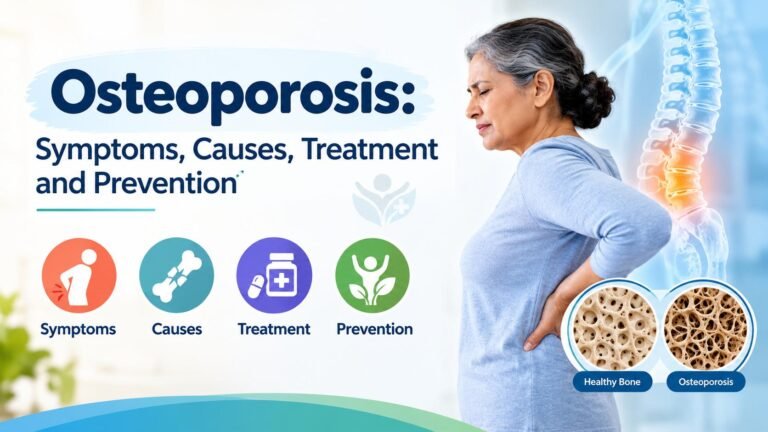
Most of us never think about our bones until something goes wrong. A small slip in the bathroom, a minor fall while getting off a bus, and suddenly there is a fracture that should not have happened so easily. This is often how people discover osteoporosis. It is sometimes called a “silent disease” because bones weaken slowly, without pain, for years.
The good news is that osteoporosis can be detected early, treated well and, in many cases, prevented. Whether you are a woman approaching menopause, an older adult, or a young person who wants to protect your future, this guide explains osteoporosis symptoms, causes, tests, osteoporosis treatment and everyday habits that keep weak bones from becoming a bigger problem.
What Is Osteoporosis?
Bones are living tissue. All through life, old bone is broken down and new bone is built. Until around our late twenties or thirties, the body builds bone faster than it loses it. After that, the balance slowly shifts. In osteoporosis, bone loss outpaces bone formation, so the bones become thin, porous and fragile.
A bone with osteoporosis looks like a sponge with bigger holes. It can break from a fall that a healthy bone would easily survive, or sometimes even from a cough, a sneeze or lifting a light bag. The most common fracture sites are the hip, spine and wrist.
Osteoporosis vs Osteopenia
You may see the word “osteopenia” on a report. It means bone density is lower than normal, but not low enough to be called osteoporosis. Think of it as a warning sign. With the right lifestyle and, if advised, treatment, many people can slow down or stop the progress.
Osteoporosis Symptoms to Watch For
In the early stages, there are usually no symptoms at all. That is why regular check-ups matter. As the disease progresses, you may notice:
- Back pain, often caused by a small fracture in the spine
- Loss of height over the years (one or two inches or more)
- A stooped or hunched posture
- A fracture from a minor fall or sudden strain
- Brittle nails and gum recession, though these are not specific signs
Many people assume back pain and shrinking height are “just age”. Please do not ignore them. A simple bone test can give you clear answers.
Causes and Risk Factors
Osteoporosis has many causes. You are more likely to develop it if:
- You are a woman after menopause, because the drop in estrogen speeds up bone loss
- You are above 50 years of age (men can have it too, usually later in life)
- A parent or sibling had osteoporosis or a hip fracture
- You have low calcium or vitamin D deficiency, which is very common in India
- You have a small, thin body frame or a low body weight
- You smoke, drink a lot of alcohol, or have a mostly sedentary lifestyle
- You have taken steroid medicines for a long time
- You have thyroid, parathyroid, kidney, liver or digestive conditions, rheumatoid arthritis, or long-term diabetes
- You had an early menopause or surgery to remove the ovaries
How Is Osteoporosis Diagnosed?
The standard test is the bone density test, called a DEXA scan (dual-energy X-ray absorptiometry). It is quick, painless and uses a very low dose of radiation. The result is given as a T-score:
- Normal: a T-score of -1 or above
- Osteopenia: between -1 and -2.5
- Osteoporosis: -2.5 or lower
Your doctor may also order blood tests for calcium, vitamin D, thyroid hormone, kidney function and other markers to find out why your bones are weak. An X-ray of the spine may be advised if there is back pain or loss of height.
Osteoporosis Treatment: What Doctors Recommend
Treatment has two goals: slow down bone loss and prevent fractures. Your plan depends on your age, your T-score, your fracture history and your overall health.
- Calcium and vitamin D supplements if your diet or sun exposure is not enough, as advised by your doctor
- Bone-strengthening medicines, such as bisphosphonates (like alendronate or zoledronic acid), denosumab, or bone-building drugs like teriparatide for severe cases
- Hormone-related treatment in selected women, after weighing benefits and risks
- Treating the underlying cause, such as a thyroid problem or vitamin D deficiency
- Physiotherapy and exercise to improve strength and balance
- Fall-proofing the home, which is one of the most important and often forgotten steps
Never start, stop or change osteoporosis medicines on your own. Some of them have specific instructions about timing and posture, and your doctor will also monitor your kidneys, teeth and bones over time.
Calcium Rich Foods for Strong Bones
Food comes first. Adults in India generally need around 1,000 mg of calcium a day, and more in some situations, such as pregnancy, breastfeeding and after menopause. Good everyday sources include:
- Milk, curd, buttermilk, paneer and cheese
- Ragi (finger millet), which is one of the best plant sources of calcium
- Sesame seeds (til), almonds and chia seeds
- Green leafy vegetables like spinach, amaranth, moringa leaves and fenugreek
- Soybean, tofu and chickpeas
- Small fish eaten with bones, such as sardines, if you eat non-vegetarian food
For vitamin D, sunlight is the main natural source, and a short daily exposure of face, arms and legs in the sun helps many people. Eggs, fatty fish and fortified foods add a little more. Because deficiency is so common, a blood test followed by a doctor-advised supplement is often the safest approach.
Exercise That Protects Your Bones
Bones become stronger when they work against gravity. The best options are:
- Weight-bearing exercise: brisk walking, dancing, climbing stairs, light jogging
- Strength training: light weights, resistance bands, or body-weight exercises
- Balance exercises: yoga, tai chi, standing on one leg while holding a support
- Posture work: gentle stretches for the back and shoulders
Start slowly, especially if you already have osteoporosis. A physiotherapist can design a safe plan. Avoid exercises that involve sharp forward bending or heavy twisting of the spine unless your doctor says they are safe.
Simple Habits to Prevent Osteoporosis
- Eat a balanced diet rich in calcium and protein
- Get enough vitamin D
- Do regular physical activity
- Quit smoking and keep alcohol low
- Limit too many cups of tea, coffee and soft drinks
- Maintain a healthy weight, since being too thin raises risk
- Get a bone density test if you are at risk, usually women after menopause and men after 65, or earlier if your doctor suggests it
Which Doctor Should You See?
You can start with a general physician, and then consult an orthopedic doctor, an endocrinologist or a rheumatologist depending on the cause and severity. To find specialists and hospitals in your city, you can explore the listings on My Hospital Listing.
What are the first signs of osteoporosis?
Often there are none. Back pain, loss of height, a stooped posture or a fracture after a minor fall can be early signs.
Can osteoporosis be cured?
It cannot be fully cured, but it can be controlled. Medicines, nutrition and exercise can slow bone loss, strengthen bones and lower fracture risk.
Which test confirms osteoporosis?
A DEXA scan, also called a bone density test, is the standard test. A T-score of -2.5 or lower means osteoporosis.
At what age does osteoporosis start?
Bone loss begins slowly after about the age of 30 to 35. It becomes more noticeable after menopause in women and after 65 or 70 in men.
Which foods are good for osteoporosis?
Milk, curd, paneer, ragi, sesame seeds, almonds, leafy greens, soybean, tofu and small fish with bones are all good choices.
Does vitamin D deficiency cause osteoporosis?
Low vitamin D makes it hard for the body to absorb calcium, which weakens bones over time. It is a major contributor, though not the only one.
Can men get osteoporosis?
Yes. Women are at higher risk, but men can develop osteoporosis too, usually at an older age or because of steroids, low testosterone or other illnesses.
Is walking good for osteoporosis?
Yes. Walking is a weight-bearing activity that helps maintain bone strength. Combine it with strength and balance exercises for the best results.
How often should I get a bone density test?
It depends on your risk and your last result. Many people repeat it every one to two years if they are under treatment. Your doctor will guide you.
Which doctor treats osteoporosis?
An orthopedic doctor, endocrinologist or rheumatologist usually treats it. A general physician or a gynecologist can also begin the evaluation.
Final Thoughts
Osteoporosis does not have to mean a life of fear and fragility. With early testing, the right food, regular movement, safe homes and proper treatment, you can protect your bones and your independence. Start today: add one calcium-rich food to your plate, take a short walk, and book a bone check if you are at risk.
Disclaimer: This article is for general information only and is not a substitute for professional medical advice, diagnosis or treatment. Always consult a qualified doctor before starting any medicine or supplement.




Pingback: विटामिन D की कमी के लक्षण और कारण | जानें पूरी जानकारी