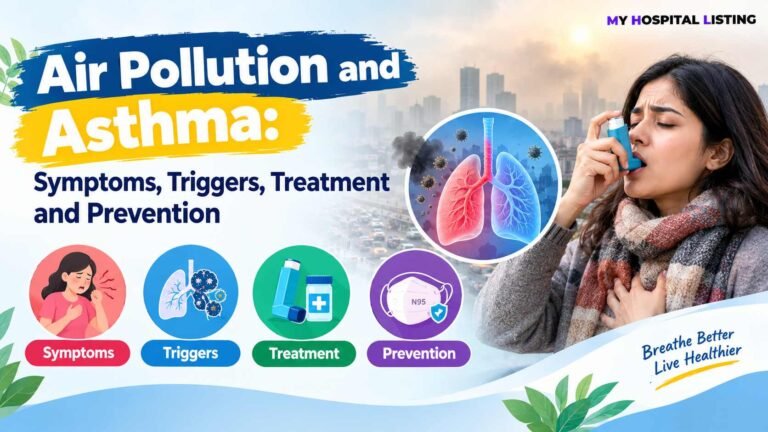
Every winter, people across North India face worsening air pollution. Smog covers roads, visibility decreases, and breathing becomes uncomfortable. Many families notice persistent coughing, wheezing, and chest tightness during this season. For people living with asthma, polluted air can make everyday activities harder.
Air pollution and asthma are closely connected. Pollutants can irritate the airways and trigger asthma symptoms. Children, older adults, and people with existing lung conditions need extra care during periods of poor air quality.
The good news is that appropriate treatment and practical precautions can help manage asthma. Understanding the asthma symptoms, common asthma triggers, and Air Quality Index (AQI) can help you make informed decisions.
In this guide from My Hospital Listing, learn about asthma, pollution-related breathing problems, treatment options, and ways to protect your respiratory health.
What Is Asthma?
Asthma is a chronic condition that affects the airways inside the lungs. These airways can become inflamed and sensitive to certain triggers. The muscles surrounding them may tighten, and extra mucus can develop.
These changes make it harder for air to move through the lungs. Symptoms may appear occasionally or occur more frequently. Some people experience mild symptoms, while others face severe asthma attacks.
Asthma can affect both children and adults. It is not contagious and cannot spread from person to person.
Although asthma usually requires long-term management, suitable treatment can help control symptoms. Many people with asthma continue working, studying, exercising, and enjoying daily activities.
How Does Air Pollution Affect Asthma?
Air pollution contains particles and gases that can irritate the respiratory system. These pollutants may worsen existing asthma and trigger breathing difficulties.
Common pollutants include:
- PM2.5: Fine particles that can travel deep into the lungs.
- PM10: Airborne particles that can irritate the nose and respiratory tract.
- Nitrogen dioxide (NO₂): A gas associated with vehicle exhaust and combustion.
- Ground-level ozone: A pollutant that can irritate the airways.
- Sulphur dioxide (SO₂): A gas that can affect breathing.
- Smoke: Pollution from cigarettes, burning waste, firecrackers, and biomass fuels.
Traffic emissions, industrial activities, construction dust, and crop residue burning can contribute to air pollution. Household smoke can also affect indoor air quality.
People with asthma may notice coughing, wheezing, chest tightness, or shortness of breath after exposure. Repeated exposure can also contribute to respiratory health problems.
Cold weather may worsen symptoms for some people. Cold, dry air can irritate sensitive airways. Winter smog can add another challenge.
Common Asthma Symptoms
Asthma symptoms differ from person to person. They may appear during the day, at night, or after exposure to specific triggers.
Common asthma symptoms include:
- Wheezing or a whistling sound while breathing.
- Persistent coughing, especially at night.
- Chest tightness or discomfort.
- Shortness of breath.
- Difficulty breathing during exercise.
- Waking up because of coughing or breathlessness.
- Repeated episodes of coughing during winter.
Some people experience symptoms only occasionally. Others have frequent breathing difficulties that affect sleep and daily activities. Children may develop repeated coughing episodes that families mistake for ordinary colds. However, not every cough indicates asthma. If coughing or wheezing keeps returning, consult a healthcare professional. A doctor can assess your symptoms and recommend suitable tests.
Common Asthma Triggers
An asthma trigger is something that causes symptoms or makes them worse. Different people may react to different triggers.
Common asthma triggers include:
- Outdoor air pollution and traffic fumes.
- Cigarette smoke and secondhand smoke.
- Dust mites in bedding and upholstery.
- Pollen and mould.
- Cold air and sudden weather changes.
- Respiratory infections, including colds and flu.
- Strong perfumes and cleaning sprays.
- Mosquito coils and incense smoke.
- Pet dander from animals.
- Exercise, especially in cold air.
Some medicines can also worsen asthma in certain individuals. Never stop prescribed medication without medical advice.
Keeping a symptom diary can help identify personal triggers. Record when symptoms appear, outdoor air quality, activities, and possible exposures.
Share this information with your doctor. It may help improve your asthma management plan.
Understanding the Air Quality Index (AQI)
The Air Quality Index (AQI) communicates how polluted the air is. India’s National AQI uses six categories.
| AQI Range | Category | General Meaning |
|---|---|---|
| 0–50 | Good | Minimal health impact |
| 51–100 | Satisfactory | Minor discomfort may affect sensitive people |
| 101–200 | Moderate | People with lung conditions may experience breathing discomfort |
| 201–300 | Poor | Prolonged exposure can cause breathing discomfort |
| 301–400 | Very Poor | Respiratory health risks increase with exposure |
| 401–500 | Severe | Serious health effects are possible, especially for vulnerable people |
These categories provide general guidance. Individual responses can vary depending on health and exposure.
People with asthma should pay attention to local AQI readings. When pollution becomes severe, consider moving exercise indoors and reducing outdoor exertion.
Check official readings through the Central Pollution Control Board’s air-quality portal. Local conditions can differ between neighbourhoods, so check the nearest available monitoring station.
How to Protect Yourself From Air Pollution
People with asthma can take practical steps to reduce exposure. These precautions cannot eliminate all pollution, but they may help lower exposure.
1. Check the AQI Before Going Outside
Check local air quality before planning outdoor activities. Avoid strenuous outdoor exercise when pollution levels are high.
Consider indoor exercise when the air is heavily polluted. Follow your doctor’s advice if you have poorly controlled asthma.
2. Wear a Well-Fitting N95 Mask
A well-fitting N95 respirator can reduce exposure to many airborne particles. Choose a mask that fits snugly around your nose and mouth.
Ordinary cloth masks offer less protection against fine particles. Remember that particulate respirators do not protect against every harmful gas.
A mask also does not replace prescribed asthma medication.
3. Improve Indoor Air Quality
Close windows during periods of heavy outdoor pollution when practical. Ventilate your home when outdoor air quality improves.
Avoid smoking indoors and keep away from burning waste. Reduce incense, candles, and other sources of indoor smoke.
If possible, consider a properly sized HEPA air purifier. Follow the manufacturer’s instructions for filter replacement and maintenance.
Avoid air cleaners that deliberately generate ozone.
4. Reduce Dust Inside Your Home
Use a damp cloth for cleaning instead of dry dusting. Wash bedding regularly and keep it completely dry.
Reduce unnecessary clutter that collects dust. Address damp patches and mould promptly.
If dust mites trigger your symptoms, ask your doctor about additional household precautions.
5. Avoid Outdoor Exercise During Severe Pollution
Outdoor running and strenuous exercise can increase the amount of polluted air you breathe.
Move workouts indoors when air quality deteriorates. If you must travel outside, avoid heavily polluted roads where practical.
Do not stop physical activity completely without reason. Ask your healthcare professional how to exercise safely with asthma.
6. Keep Your Medicines Available
Carry your prescribed reliever inhaler when you leave home. Follow your written asthma action plan.
Do not increase or reduce medication doses on your own. Contact your healthcare professional if symptoms become more frequent.
Asthma Treatment: Reliever and Controller Inhalers
Asthma treatment aims to control airway inflammation, reduce symptoms, and prevent serious attacks.
Inhalers deliver medication directly into the respiratory system. Your doctor chooses the treatment based on your symptoms, age, medical history, and risk of attacks.
Reliever Medicines
Reliever medicines help ease symptoms by opening narrowed airways. The exact medicine and recommended use depend on your treatment plan.
Some people may need a different inhaler strategy. Follow your doctor’s instructions rather than relying on a general online recommendation.
Controller Medicines
Controller treatment helps manage airway inflammation and reduce future symptoms. Inhaled corticosteroids are an important part of asthma care.
Some patients need combination inhalers containing more than one medicine. The appropriate treatment depends on individual needs.
Do not stop controller treatment simply because you feel better. Discuss any treatment changes with your doctor.
Use Your Inhaler Correctly
Incorrect inhaler technique can reduce the amount of medicine reaching your lungs.
Ask your doctor or pharmacist to demonstrate the correct technique. A spacer may help some people using a metered-dose inhaler, particularly children.
If your inhaler contains an inhaled corticosteroid, follow the instructions about rinsing your mouth after use.
If you need your reliever more often than usual, arrange a medical review.
How Is Asthma Diagnosed?
Doctors diagnose asthma by reviewing symptoms, medical history, and test results.
Common assessment methods include:
- Spirometry: Measures how much air you exhale and how quickly.
- Peak flow measurement: Checks how quickly you can blow air out.
- Bronchodilator testing: Assesses changes in breathing after an appropriate medicine.
- Allergy testing: May help identify relevant allergic triggers.
- Additional investigations: Your doctor may recommend these when another condition is suspected.
Not everyone needs every test. Your doctor will select appropriate investigations based on your symptoms.
A pulmonologist, also called a lung specialist, can assess suspected asthma and help manage difficult symptoms.
Make an Asthma Action Plan
An asthma action plan explains how to manage symptoms and when to seek medical help.
Ask your doctor to prepare a plan suited to your condition. It should explain your usual treatment, early warning signs, and emergency steps.
Keep a copy at home and share relevant information with family members. For children, discuss the plan with caregivers and school staff.
Some patients benefit from tracking peak flow readings. Your doctor can explain whether home monitoring is appropriate.
Asthma in Children: What Parents Should Know
Children may be particularly affected by poor air quality. Pollution can irritate their airways and worsen existing respiratory symptoms.
Parents should watch for repeated coughing, wheezing, breathlessness, or difficulty playing because of breathing problems.
Practical precautions include:
- Check the AQI before outdoor activities.
- Move strenuous exercise indoors during heavy pollution.
- Keep children away from tobacco and household smoke.
- Follow the child’s prescribed asthma treatment.
- Ensure caregivers understand the child’s asthma action plan.
- Arrange medical assessment for recurring symptoms.
Do not assume every episode of coughing is asthma. A healthcare professional can assess possible causes and recommend suitable treatment.
When Is Asthma an Emergency?
A severe asthma attack can become life-threatening. Recognising warning signs is important.
Seek emergency medical care if you or your child experiences:
- Severe or rapidly worsening breathing difficulty.
- Inability to speak complete sentences because of breathlessness.
- Blue or grey lips or fingertips.
- Confusion, unusual drowsiness, or exhaustion.
- Little or no improvement after following the prescribed emergency treatment plan.
- Severe chest or breathing symptoms that continue to worsen.
Do not delay emergency care while trying home remedies. Follow your emergency action plan and seek immediate professional help.
Can Air Pollution Cause Asthma?
Air pollution can worsen asthma and may contribute to the development of asthma. However, asthma usually involves several interacting factors.
Genetics, allergies, early-life exposures, and environmental conditions may all influence risk. It is not possible to attribute every asthma case to pollution alone.
Reducing exposure to polluted air supports respiratory health. Cleaner indoor air and appropriate asthma treatment are especially important for people with existing breathing conditions.
Conclusion
Air pollution and asthma can create significant challenges, particularly during winter in North India. Smog, traffic emissions, dust, and smoke may worsen breathing symptoms.
Understanding asthma symptoms and personal triggers helps you make safer daily choices. Checking the AQI, reducing exposure, and improving indoor air quality can also help.
Most importantly, follow your prescribed asthma treatment and maintain a written action plan. Seek medical advice when symptoms become more frequent or difficult to control.
For information about healthcare services and specialists, explore My Hospital Listing. Use reliable medical information to make informed decisions, and consult a qualified healthcare professional for individual advice.
Can air pollution make asthma worse?
Yes. Air pollution can irritate the airways and trigger asthma symptoms. People with asthma should monitor local air quality and follow their treatment plans.
What are the common symptoms of asthma?
Common symptoms include wheezing, coughing, chest tightness, and shortness of breath. Symptoms may worsen at night or after exposure to triggers.
What AQI is unsafe for people with asthma?
There is no single AQI threshold that affects everyone equally. People with asthma should use local health advisories and their doctor’s advice to guide activity.
Which mask is best for air pollution?
A properly fitted N95 respirator can reduce exposure to airborne particles. It does not protect against every gas or replace asthma treatment.
Can an air purifier help people with asthma?
A suitable HEPA air purifier can reduce airborne particles indoors. Results depend on room size, filtration, maintenance, and pollution sources.
How can I prevent asthma attacks during winter?
Follow your prescribed treatment, identify personal triggers, and check the AQI. Reduce strenuous outdoor activity during heavy pollution and cold weather if these worsen your symptoms.
Is asthma curable?
Asthma generally requires ongoing management. Appropriate treatment can help many people control symptoms and maintain an active life.
Should I stop using my inhaler when I feel better?
Do not stop or change prescribed treatment without medical advice. Some medicines help prevent future attacks even when symptoms are absent.
Which doctor treats asthma?
A pulmonologist specialises in lung conditions, including asthma. A primary care doctor can also assess symptoms and refer you when necessary.
When should I seek emergency care for asthma?
Seek emergency care for severe breathing difficulty, blue or grey lips, confusion, or symptoms that worsen despite following your prescribed emergency plan.
Final Thoughts
Pollution may not be in your hands, but your preparation is. Check the AQI, keep your inhalers handy, wear a proper mask, clean your home smartly and see your doctor before the season gets harsh. With a little planning, you can protect your lungs and keep asthma from slowing you down.
Disclaimer: This article is for general information only and is not a substitute for professional medical advice, diagnosis or treatment. Always consult a qualified doctor, and follow your own asthma action plan.